The “Guterura” in Rwandan culture, the Best Traditional Technic Used by men to Get Married.

Love existed since before. It was expressed in different ways depending on the evolution of cultures. During the existence of our ancestors, there were many actions which should express love to someone. Some of the traditional practices are considered as violence. But the question is: were our great grandparent’s rapists?  The answer to this can be Yes or No since there was no rule which should govern the community. Our grandparents were very hard-workers and were committed people. Generally, their lives should be characterized by milking cattle, educating children at home, carrying out the noble activity of Guterura. For those of you who don’t know the meaning of “Guterura”, this means “to carry”. This is a traditional cultural practice where a man should identify a woman as his future wife, then he uses the forces to carry her up to his house without dating.

The process was like made in the way that the targeted women should know what will happen to her. Without her knowledge, she should find herself being carried by a man with the help of his friends and relatives. After a while, the man should go back to the family of the married women and then negotiate for her hand in marriage. Is this an act of sexual violation?

In today’s world, we all know that making pressure to someone in order for him to do something without his/her consent is harassment or violation.  And the result from this is that it can lead people to be jailed since they violate the human right. The question here now is that “what can we do for the families and cultures which are still practicing this traditional culture”? The response to this can depend on the understanding of each person and he believes that he has. Many people can focus on what the law says and other people do respect the culture. This is what creates conflict between culture and law.

Depending on what we are now seeing, I can say that the practice of Guterura was good. This is my own point of view because everyone can have his/her point of view. Look at the way things are nowadays. People perform all the romantic movies, there is a cyber-dating, and even some relationships are starting in the morning and die in the evening. When people are getting married, they are divorcing in a few months after. We should not assist this to our grandparents. Though they used the Guterura system for them to get married, their union was taken in a serious way.

I would like to hear about your own point of view about this case by leaving a comment down.

What to know About Rwandan Culture

“The first step to controlling your world is to control your culture. To model and demonstrate the kind of world you demand to live in, to write the books, make the music, shoot the films, and to paint the art”. American novelist and journalist. So, how to make this done? Another solution is to know more about other people’s culture since we all live interdependently. Rwanda is one of the African countries which has a very diversified a culture which you can find in other neighbor countries.

  1. The dressing of Rwandans

Dressing in Rwanda has a meaning. There is a big consideration to a person who dresses traditional dress called Mushanana.

Image showing the Mishanana dressing and how the foreign people are attracted to it. All about this

•           The important of Mishanana dressing in Rwanda

The Mushanana is the traditional ceremonial dress of women in Burundi and Rwanda. It consists of a wrapped skirt bunched at the hips and a sash draped over one shoulder, typically worn over a tank top or bustier.

•           Casual and professional dressing in Rwanda.

image showing the normal and casual dressing in Rwanda. About this image

Women can wear pants in Kigali or in Butare. But if working in the rural area, a skirt or dress is necessary. The hemline can’t be above the knee. A skirt and nice fitted shirt and sandals is the most relaxed I would recommend for work situations. Men usually wear dress pants and a dress shirt while a tie is optional but often worn. Dress shoes can be polished or, at the very least, dusted off when you get to work. Rwandans dress smart but not very conventionally. Very bright colors and varied patterns are acceptable. Clothes are always clean and pressed.

2. The greetings in Rwanda

For someone you see frequently, you may use the greeting “Waramutse” in the morning and “Wiriwe” in the afternoon. “Urabeho” can be used to say “goodbye” at any time, but if you would like to say “goodnight,” you may say “uramuke” in the evening

Greeting position and how to shake the hand in Rwanda By Janice Millsh

Finally, to show respect to someone older than or in a position of power over you, you include an “M” at the beginning of the greeting. For example, “Uraho” becomes “Muraho,” “Waramutse” becomes “Mwaramutse,” “Wiriwe” becomes “Mwiriwe,” “Urabeho” becomes “Murabeho,” and “Uramuke” becomes “Muramuke.”

3. The art in Rwanda and its history interpretation

All about the image: Daniel Ntwarih

 The art in Rwanda represent the information or a history behind. Many statutes are made thanks to a given story. They are used to inform people and lead them keep the memory of the country. It beauty and its nature. Rwanda’s Art dates way back to the early 1880’s when Rwandans distinctively used dung ‘paintings’ dominated by black, brown and white whorls and other geometric abstractions, these unique and earthy works were used in local house decorations. Today, Rwanda’s arts present a large range of arts and craft products, that are all hand-made, based exclusively on natural materials, and nontoxic dyes compliant with the highest international quality standards

It is important to come back to the Rwandan culture and seek from it values that contributed to the building of nation. By knowing this, it will help national and international people to get to know the value, how they can behave once they are in Rwanda, what they can get to know if they are in Rwanda. It will also give a short story about the Rwanda, where it comes from, where the country is going, and how the dream of Rwandans is growing day by day.

I would suggest you to visit this great country and learn about its culture and art.

The 5 Important Bantu Languages to know once in Africa

The African continent is characterized by different cultures. Each culture has its own language. There are many languages that are spoken in different countries depending on the culture that people tend to have in common. The Bantu language is the set of some 500 languages belonging to the Bantoid subgroup of the Benue-Congo branch of the Niger-Congo language family. These languages are spoken in a very large area, including most of Africa from southern Cameroon eastward to Kenya and southward to the southernmost tip of the continent. The language list below will help you to know the African culture, and how to behave while doing businesses or visiting Africa.

  1. Lingala
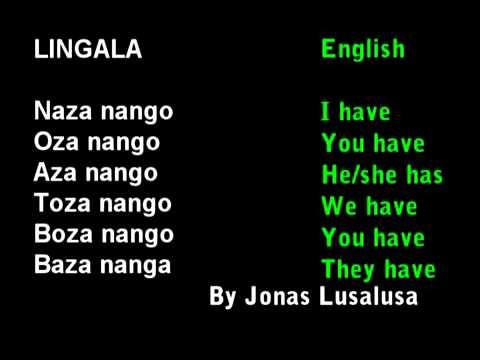
Important terms in Lingala language. By Lusalusa

This language is spoken by 10 million people in Africa. It is spoken primarily in the northwestern region of the Democratic Republic of the Congo and large swaths of the Republic of the Congo (Congo Brazzaville).  This language is the product of a blending of several dialects that were historically spoken by peoples living along the Congo River. The greeting words in this language are “Mbote”: which means “Hello”. The answer to this is “Malamu”: which means “Well” Another word is “Sango nini” Which means “What is your news” And the response is “Sango malamu” Which means “The news is well”

2. Kinyarwanda.

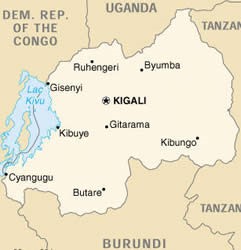
Image showing areas where Kinyarwanda language is spoken. By Irene Tompson

Spoken by 12 million people in Africa. Also known as Rwandan language, this is the official language of Rwanda. This language is also spoken in the neighbor countries of Rwanda such as Burundi, Uganda and the Democratic Republic of the Congo. Some greeting words that are used in this language are: “Amakuru” which means “How are you” and the answer is “Nimeza” which means “I am good”. “Mwaramutse” is used while greeting someone in the morning. The answer to that is “Yego”. “Mwiriweho” is also used while greeting someone during the evening times in order to know how was his day. The answer to this is also “Yego”.

3. Swahili

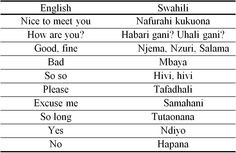
Used by 140 million people in Africa, it is considered as a language that is spoken in different countries especially Southeast African countries. Primarily this language is spoken in Tanzania, Kenya, Uganda, Rwanda, Burundi, Mozambique, and the Democratic Republic of the Congo. It carries a heavy Arabic influence, mainly through contact with the Arabic-speaking Muslim inhabitants of the region. The principal words used in Swahili while greeting are “Hujambo” which means “How are you?” And the answer is “Sijambo” meaning that “I am fine”. Another word is “Habari gani?” Meaning what is your news? And the answer is “Muzuri Sana” My news is good

4. Shona.

Zimbabwe tribe which speaks the Shona language. By AnswersAfrica

This is a language which is spoken by 15 million people in Africa. Shona is separated into several dialects such as Karanga, Zezuru, Korekore, Ndau, and Manyika. This language is considered as the most widely spoken Bantu languages after Swahili. It is the principal language in Zambia, Botswana, and Mozambique. It is considered to be the Bantu language with the most first-language speakers in Africa.  While greeting, you can say “Mhoro” which means “Hello” and the response is “Mhoroi” which means Hello too. You can also say “Wakadini zvako?” which means “How are you?”. And here the answer will be “Ndiri rayiti

5. Zulu

Image showing a Zulu tribe which speaks Zulu Language By Merxcine Cush

Spoken by 10 million people in Africa, the Zulu language is the most widely spoken home language in South Africa. It is understood by approximately half of the country’s population. This language is not considered as an official one. But due to the fact that many people speak it, some people have chosen it as the second language for them. Some of the greeting words that are used for this language are: “Unjani?” Meaning “How are you?” And the response is “Ngikhona” meaning I am fine.

Conclusion.

Knowing about these important languages in Africa is the most important thing to characterize someone who has the spirit of travelling. The above languages are not the only ones, but if a person has some notions in these languages, he can express him/herself in Africa and get to be heard by all people. In addition, Africans like someone who puts some effort to learn their languages. Sometimes you can see someone smiling when you are trying to greet him using his language. The fact of smiling shows that he is happy with you. Knowing the above greeting words helps people, especially tourist and business people to be in good relationship with the clients. It also creates a kind of ambiance while talking to someone who is trying to imitate the language and culture.  Get to know Africa, learn more in Africa and increase your experience by traveling in Africa.